
Choosing the right welding process can influence production efficiency, consistency, and how effectively a metal component is manufactured. For OEMs and industrial manufacturers, the decision often comes down to two approaches: robotic welding and manual welding.
When comparing robotic welding vs. manual welding, manufacturers need to consider production quantities, component geometry, weld accessibility, and project specifications. Washington Metal Fabricators offers both processes, allowing manufacturers to source custom welded components based on their specific production requirements.
Robotic Welding vs. Manual Welding: Key Differences

The primary difference between robotic and manual welding is how the welding operation is performed.
Robotic welding uses programmable equipment to control the movement of a welding torch along a defined path. Manual welding relies on a skilled welder to control the process, adjusting technique and positioning as needed.
Both methods can produce high-quality welds when properly applied.
| Factor | Robotic Welding | Manual Welding |
|---|---|---|
| Production volume | Often advantageous for repeat production | Well suited to prototypes and smaller runs |
| Repeatability | Programmed movements support consistent weld placement | Consistency depends on welder technique and process control |
| Component geometry | Best suited to predictable geometry and accessible joints | Adaptable to complex or variable configurations |
| Setup requirements | Requires programming and appropriate fixturing | Often requires less preparation for one-off work |
| Production changes | May require programming or fixture adjustments | Can accommodate changes with greater flexibility |
| Weld accessibility | Depends on robotic equipment and tooling access | Welders can adjust positioning and technique |
Neither process is automatically superior. The appropriate choice depends on the component being manufactured and the requirements of the production project.
When Does Robotic Welding Make Sense?
Robotic welding is particularly useful when manufacturers need consistent welding operations across repeated production runs.
Once a robotic welding system is programmed and the necessary fixturing is established, it can repeat specified welding movements across multiple components. This makes welding automation valuable for projects involving predictable part geometry and recurring production requirements.
Robotic welding may be appropriate when:
The same welded component is manufactured repeatedly.
Production quantities justify programming and setup.
Components have consistent dimensions and fit-up.
Weld locations are accessible to the robotic equipment.
Repeatable weld placement is important.
Suitable fixtures can position components consistently.
For example, an OEM manufacturing industrial equipment may require hundreds of identical welded frames or supports. If the components have consistent geometry and accessible weld joints, robotic welding may provide an efficient way to support repeat production.
However, automation does not eliminate the need for proper material preparation, joint fit-up, or quality control. Even a precisely programmed robot depends on consistent component positioning and appropriate welding parameters.
When Is Manual Welding the Better Choice?
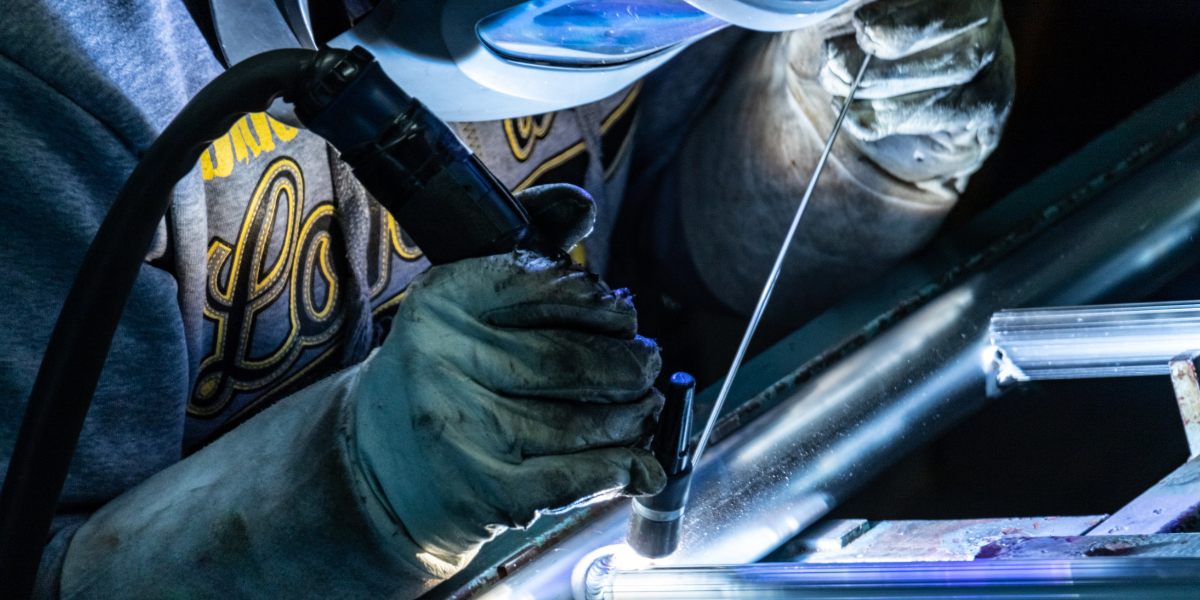
Manual welding offers flexibility that can be particularly valuable for complex components, smaller production quantities, and projects with changing requirements.
A skilled welder can adjust positioning, travel speed, torch angle, and other aspects of the welding operation based on the joint and component being fabricated.
This adaptability makes manual welding useful when parts are difficult to position consistently or when the welding requirements vary between components.
Manual welding may be preferable for:
Prototype fabrication and initial production runs
Low-volume or one-off components
Complex assemblies with difficult-to-access joints
Components requiring frequent adjustments
Projects with significant variation between parts
Welding operations that are impractical to automate
For manufacturers developing a new component, manual welding may also be more practical while production specifications are being finalized.
This does not mean manual welding is inherently less precise or produces lower-quality results. Experienced welders can achieve demanding fabrication requirements, and the quality of either process depends on proper procedures, equipment, materials, and inspection.
What Factors Influence Welding Process Selection?
Selecting between robotic and manual welding involves more than comparing production speed. Several manufacturing considerations determine whether automation is appropriate for a particular project.
Production Volume and Repeat Orders
Robotic welding often becomes more attractive when setup and programming can be applied across a substantial number of components or repeated orders.
For short production runs, the preparation required for automation may outweigh its advantages.
Component Geometry and Weld Accessibility
The size, shape, and configuration of a component influence how easily welding equipment can access the required joints.
Robotic systems operate within defined movement and positioning limits. Manual welders may have greater flexibility when working around complicated assemblies or difficult joint locations.
Part Consistency and Fixturing
Robotic welding depends on components being positioned consistently throughout production.
Variations in part dimensions, alignment, or joint fit-up can affect the welding operation. Appropriate fixturing and consistent upstream fabrication processes are therefore important considerations.
Project Specifications and Quality Requirements
Material type, weld specifications, tolerances, and inspection requirements also influence process selection.
Manufacturers should evaluate these requirements alongside production quantities rather than assuming one welding method will be appropriate for every application.
For projects involving multiple fabrication operations, welding may be integrated with cutting, forming, machining, and finishing as part of a broader production metal fabrication program.
Can Robotic and Manual Welding Be Used on the Same Project?
Yes. Robotic and manual welding are not necessarily competing approaches. Different components within the same manufacturing project may be better suited to different welding methods.
For example, an industrial equipment assembly could contain repeatable structural components appropriate for robotic welding alongside smaller or more complex parts requiring manual welding.
The appropriate combination depends on the customer's drawings, component requirements, and available manufacturing equipment.
Having access to both processes allows a fabricator to evaluate welding requirements without relying exclusively on one method.
Manual and Robotic Welding at Washington Metal Fabricators
Based in Washington, Missouri, Washington Metal Fabricators provides industrial metal fabrication services to manufacturers throughout the United States and Canada.
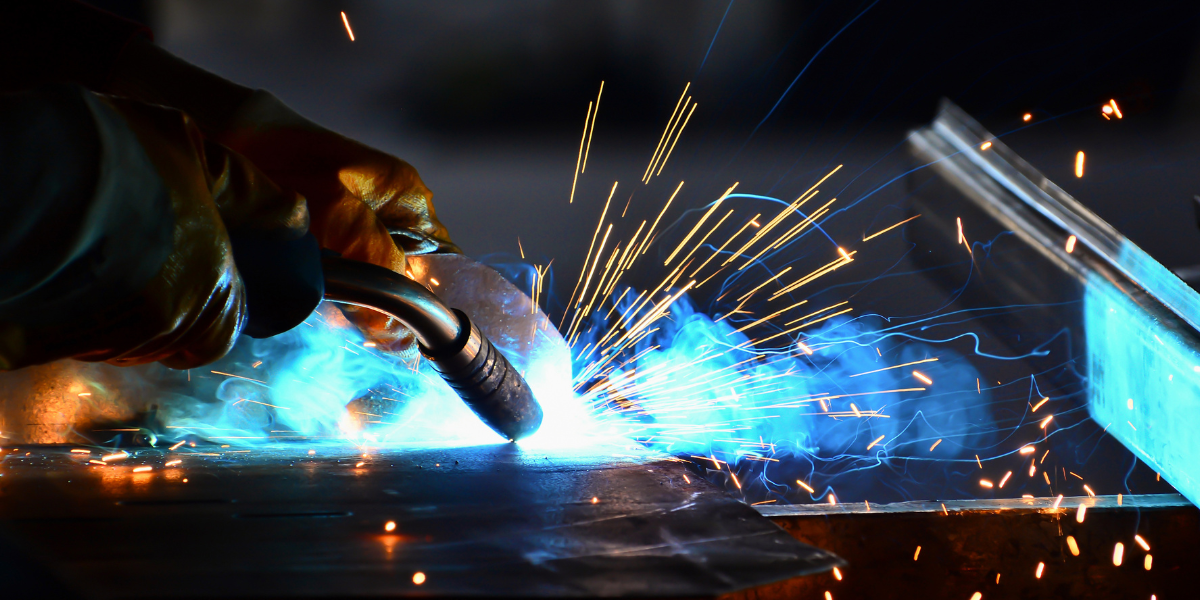
WMF operates 15 certified welding stations supporting MIG, TIG, and resistance welding, along with a Genesis Versa2 robotic welding system for appropriate production applications.
These capabilities complement the company's laser cutting, forming, CNC machining, grinding, polishing, and powder coating operations.
Manufacturers can explore WMF's robotic welding services and broader metal fabrication capabilities and equipment to learn more about the processes available for custom industrial components.
Washington Metal Fabricators manufactures components according to customer-provided drawings and specifications, with welding requirements evaluated based on the needs of each project.
Frequently Asked Questions About Robotic and Manual Welding
Is robotic welding better than manual welding?
Not necessarily. Robotic welding can be advantageous for repeatable production, while manual welding provides flexibility for complex components and smaller runs. Both can produce quality welds when properly applied.
Is robotic welding more accurate?
Robotic welding systems provide repeatable programmed movements, which can support consistent weld placement. However, weld quality and dimensional accuracy also depend on part fit-up, fixturing, welding parameters, and process control.
Is manual welding still used in industrial manufacturing?
Yes. Manual welding remains important for prototypes, complex assemblies, low-volume production, and applications where robotic welding may not be practical.
What types of components are suitable for robotic welding?
Components with consistent geometry, accessible weld joints, and repeat production requirements are often good candidates. Examples may include equipment frames, supports, brackets, and other fabricated assemblies.
Does robotic welding require special fixtures?
Robotic welding generally requires components to be positioned consistently. Fixtures can help maintain alignment and support repeatable welding operations, although specific requirements depend on the equipment and component.
Choosing the Right Welding Process for Your Components
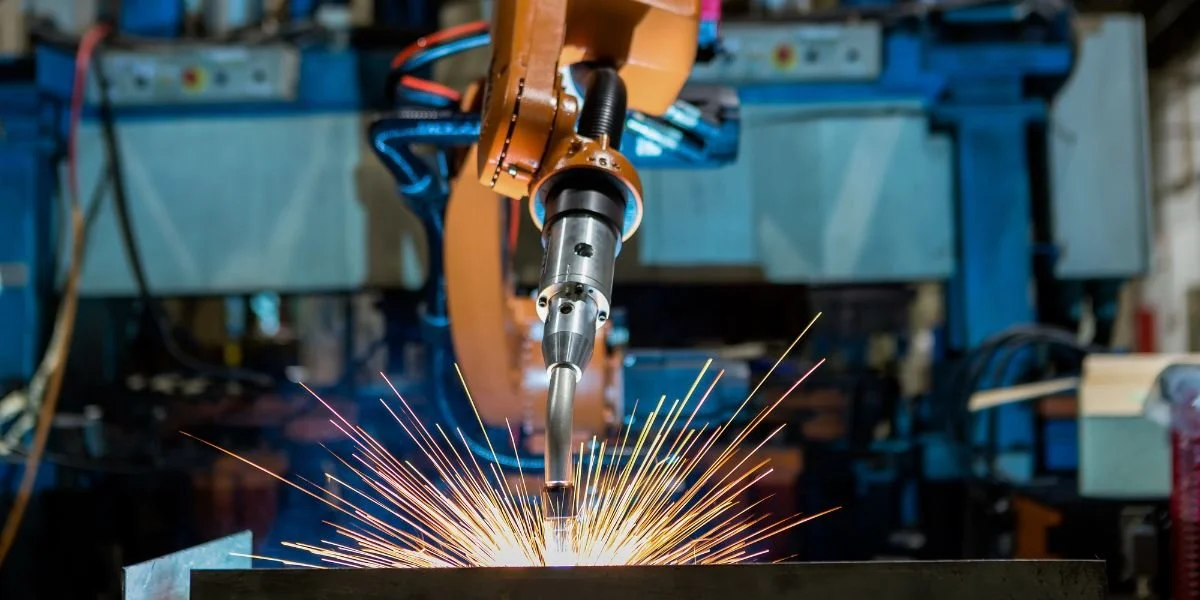
Robotic and manual welding each offer advantages for industrial manufacturing. Robotic systems can support repeatable production, while manual welding provides flexibility for complex components and changing requirements. The right approach depends on the geometry, quantities, specifications, and overall fabrication needs of the project.
With both manual and robotic welding capabilities, Washington Metal Fabricators can support a range of custom industrial manufacturing requirements.
Contact Washington Metal Fabricators today to discuss your drawings, specifications, and production needs.
Follow Washington Metal Fabricators on Facebook and LinkedIn for more information about our fabrication capabilities and recent projects.
