
Robotic welding plays an important role in industrial manufacturing, particularly when companies need to produce welded components with consistent dimensions and repeatable weld locations. From machinery frames to mounting assemblies, automated welding systems can support a variety of production requirements.
However, not every welded component is a good candidate for automation. The most suitable robotic welding applications depend on component geometry, production quantities, joint accessibility, and manufacturing specifications.
Washington Metal Fabricators (WMF) offers both robotic and manual welding services, supporting companies that need custom welded components, assemblies, and finished metal products manufactured to their specifications.
6 Common Robotic Welding Applications
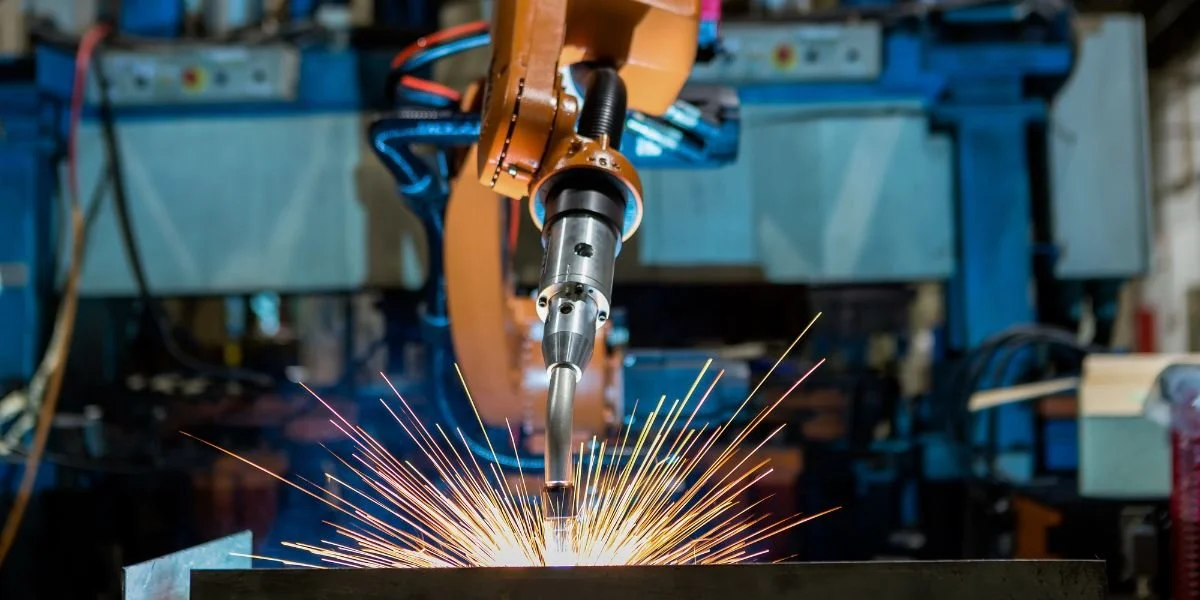
Robotic welding is used across numerous industrial manufacturing applications. While the components vary in size, configuration, and function, many share characteristics that make automated welding practical, including consistent part geometry and recurring production requirements.
The following examples illustrate where robotic welding may be appropriate.
1. Industrial Equipment Frames
Industrial machinery often relies on welded frames to support equipment, maintain component positioning, and provide structural stability during operation.
These frames may incorporate fabricated steel members, mounting points, and welded supports manufactured to specified dimensions.
Robotic welding can be appropriate when a client requires repeated production of frames with consistent geometry and accessible weld joints. Once the welding operation is programmed and components are properly positioned, the system can repeat specified weld paths across production runs.
For OEMs manufacturing multiple units of the same equipment, this repeatability can help support consistent production.
However, frame size, joint configuration, and available welding equipment must be evaluated before determining whether automation is practical.
2. Brackets and Mounting Assemblies
Brackets and mounting assemblies are used throughout industrial equipment to secure components, connect structures, and support mechanical systems.
Some applications require relatively simple welded brackets, while others involve multiple fabricated parts joined into a more complex assembly.
Robotic welding may be advantageous when these components are produced in recurring quantities and require consistent weld placement.
For example, a manufacturer ordering repeated batches of welded mounting assemblies may benefit from automated welding when the parts can be positioned reliably in fixtures.
The suitability of the process depends on the component's dimensions, material, weld specifications, and joint accessibility.
3. Material Handling Equipment
Material handling systems often incorporate welded metal components such as conveyor frames, equipment supports, mounting structures, and structural assemblies.
Companies producing these systems may require multiple identical or closely related components across a production program.
Robotic welding can support suitable applications when parts have predictable dimensions and weld joints that are accessible to the equipment.
For example, repeatable conveyor support assemblies may be candidates for automation when the individual components can be accurately positioned and secured during welding.
Because material handling equipment varies considerably in size and configuration, some assemblies may be better suited to manual welding. Evaluating the component drawings and production requirements helps determine the appropriate approach.
4. OEM Machinery Components
Original equipment manufacturers frequently source custom welded components that become part of larger machines or industrial systems.
These may include structural supports, fabricated mounting assemblies, equipment bases, and other components manufactured to customer-provided drawings.
For recurring OEM production, robotic welding can provide a repeatable process for suitable welded parts.
A manufacturer producing the same machinery model over multiple production cycles, for example, may require consistent welded components across repeated orders.
Robotic welding can be integrated into these manufacturing programs when part geometry, weld accessibility, and production quantities support automation.
Because OEM components are manufactured to specific requirements, the appropriate welding method should be determined by the drawings, material specifications, and intended production schedule.
5. Industrial Enclosures and Equipment Housings
Industrial enclosures and equipment housings protect or support components used in electrical, mechanical, and manufacturing applications.
Depending on their construction, these products may incorporate welded frames, mounting supports, brackets, and other fabricated assemblies.
Certain enclosure components can be suitable for robotic welding when they feature consistent joint locations and accessible weld paths.
However, not all enclosure designs benefit from automation. Thin materials, complicated joint configurations, cosmetic finish requirements, and variations in assembly geometry can influence process selection.
Manufacturers should evaluate the specific welded components rather than assuming that an entire enclosure assembly is appropriate for robotic welding.
6. Tubular Frames and Assemblies
Tubular metal components are used in equipment frames, structural supports, material handling systems, and other industrial assemblies.
These structures may incorporate round, square, or rectangular tubing joined through specified welding operations.
Robotic welding can be appropriate for tubular assemblies when the individual members are cut consistently, positioned accurately, and secured in fixtures that maintain the required alignment.
Tube preparation is particularly important because variations in cut geometry or joint fit-up can affect the welding operation.
For clients producing repeatable tubular assemblies, combining accurate tube cutting with appropriate welding processes can support consistent component manufacturing.
Washington Metal Fabricators offers tube laser cutting services alongside its welding capabilities, allowing multiple fabrication operations to be considered within the same manufacturing project.
What Makes a Component Suitable for Robotic Welding?

Although robotic welding has numerous industrial applications, the decision to use automation should be based on the requirements of the individual component.
Several factors influence whether a project is a good candidate.
Production Volume
Robotic welding requires programming, setup, and appropriate component positioning. These preparations are often easier to justify when the same component will be manufactured repeatedly.
Recurring production orders may also provide opportunities to reuse established welding programs and fixtures.
Component Consistency
Automated welding systems follow programmed movements, making consistent part dimensions and joint fit-up important.
Variations in upstream fabrication operations can affect how components fit together and how accurately the welding system follows the intended joint.
Weld Accessibility
The welding equipment must be able to reach the required joints while maintaining appropriate torch positioning.
Complex assemblies, obstructed joints, and certain component configurations may limit the practicality of automation.
Fixturing Requirements
Fixtures help position and secure components during welding.
For robotic applications, consistent fixturing is especially important because the equipment relies on predictable part placement throughout production.
These considerations help manufacturers determine whether robotic welding is appropriate for a specific component rather than selecting automation based solely on anticipated production speed.
When Is Manual Welding More Appropriate?
Despite the advantages of automation, manual welding remains essential in industrial metal fabrication.
Prototypes, smaller production runs, complex assemblies, and components with difficult-to-access joints may benefit from the flexibility of a skilled welder.
Manual welding can also be practical when component specifications change frequently or when production quantities do not justify robotic programming and fixture setup.
Neither method is universally better. Both can produce quality welded components when applied appropriately.
For a more detailed comparison of production requirements, flexibility, and process selection, read our guide to robotic welding vs. manual welding.
Robotic Welding at Washington Metal Fabricators
Located in Washington, Missouri, Washington Metal Fabricators provides industrial metal fabrication services to manufacturers throughout the United States and Canada.
WMF operates a Genesis Versa2 robotic welding system that accommodates weld fixtures up to 5 feet by 10 feet. The company also maintains 15 certified welding stations supporting MIG, TIG, and resistance welding, providing additional flexibility for components that require manual welding processes.
These welding capabilities complement WMF's sheet and tube laser cutting, CNC punching, metal forming, machining, grinding, polishing, and powder coating operations.
Manufacturers can explore our metal fabrication capabilities and equipment to learn more about the processes available for custom industrial components.
As a build-to-print fabricator, WMF manufactures components according to customer-provided drawings and specifications. Welding requirements are evaluated based on component geometry, materials, production quantities, and the needs of each project.
Frequently Asked Questions About Robotic Welding Applications
What industries use robotic welding?
Robotic welding is used in automotive manufacturing, industrial equipment production, material handling, and other industries requiring repeatable welded components. The suitability of automation depends on the specific application and production requirements.
What types of components are best suited for robotic welding?
Components with consistent geometry, accessible weld joints, and recurring production quantities are often good candidates. Examples include certain equipment frames, brackets, mounting assemblies, and tubular structures.
Can robotic welding be used for custom metal fabrication?
Yes. Custom components manufactured to customer-provided specifications may be suitable for robotic welding, particularly when the same design is produced repeatedly. Custom fabrication does not necessarily require manual welding.
Does robotic welding work for small production runs?
It can, but programming and fixturing requirements may make manual welding more practical for some smaller runs. The appropriate process depends on component complexity, setup requirements, and anticipated future orders.
Explore Robotic Welding Services at Washington Metal Fabricators
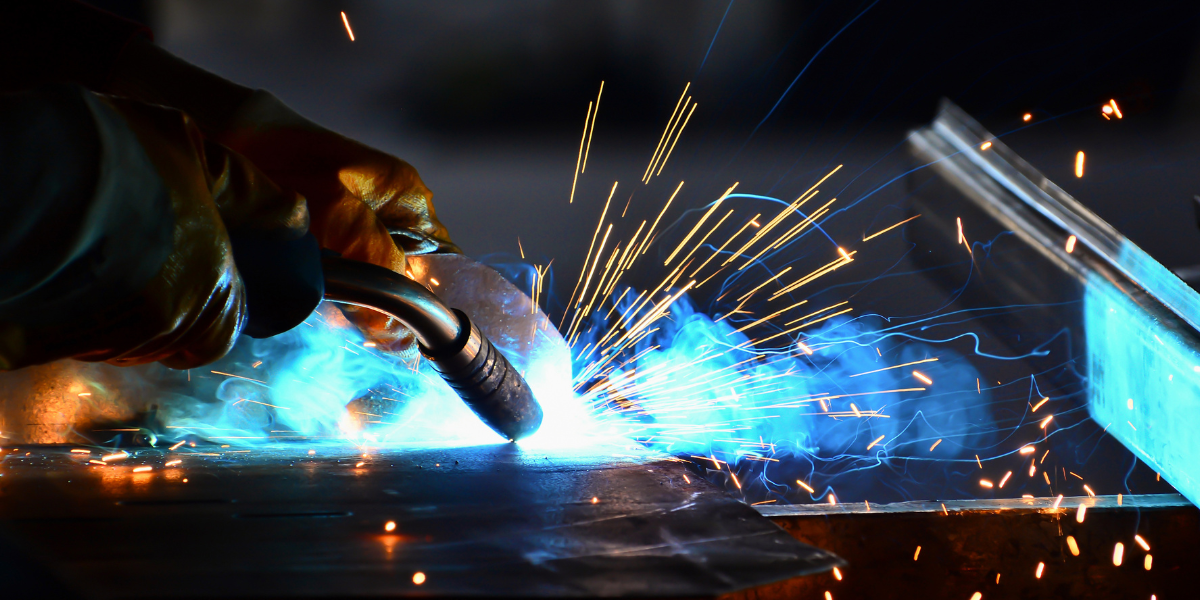
Robotic welding can support a wide range of industrial manufacturing applications, from equipment frames and mounting assemblies to tubular structures and OEM machinery components.
The most effective approach depends on the component's geometry, weld requirements, production quantities, and overall manufacturing specifications.
With both robotic and manual welding capabilities, Washington Metal Fabricators can support custom welded components for a variety of industrial manufacturing needs.
Contact Washington Metal Fabricators today to discuss your drawings, specifications, and production requirements.
Follow Washington Metal Fabricators on Facebook and LinkedIn for more information about our fabrication capabilities and recent projects.
