
When companies need consistent, repeatable welded components, selecting the right fabrication partner is an important part of the manufacturing process. Robotic welding can support recurring production requirements while maintaining programmed weld placement across suitable components and assemblies.
Based in Washington, Missouri, Washington Metal Fabricators (WMF) provides robotic welding services for businesses throughout the United States and Canada. From individual components to complete metal products, WMF manufactures to customer-provided drawings and specifications using a combination of automated welding and other in-house fabrication capabilities.
Robotic Welding Services at Washington Metal Fabricators
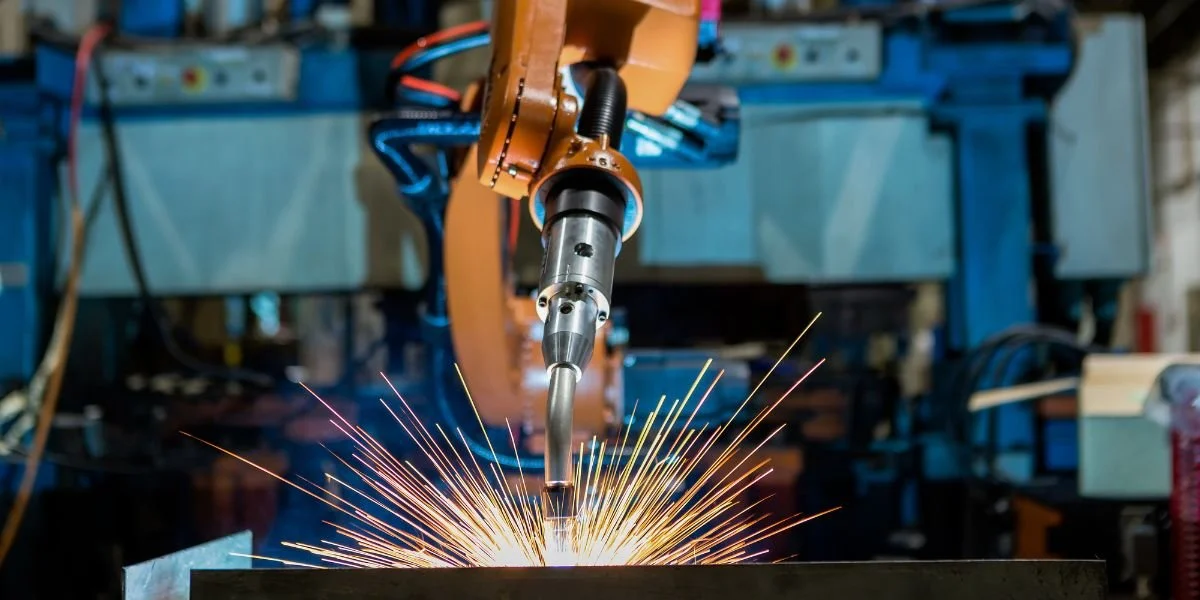
Washington Metal Fabricators operates a Genesis Versa2 robotic welding system that accommodates weld fixtures up to 5 feet by 10 feet. The equipment supports automated welding operations for components with suitable geometry, joint accessibility, and production requirements.
WMF's robotic welding services are part of a broader build-to-print manufacturing operation. Rather than requiring customers to coordinate every fabrication stage with a different supplier, WMF offers multiple in-house processes for producing custom metal components, welded assemblies, and finished products.
Robotic welding is evaluated according to each project's drawings, material specifications, production quantities, and welding requirements. This helps determine whether automation is appropriate for the component being manufactured.
Benefits of Robotic Welding for Production
Automated welding can provide several advantages when applied to suitable manufacturing projects.
Repeatable weld placement: Programmed welding movements support consistent torch positioning and weld paths across repeated components.
Production efficiency: Once programming and setup are established, automated welding can support efficient processing of recurring production orders.
Process consistency: Stable welding parameters and predictable component positioning help support repeatable manufacturing operations.
Recurring production: Established programs and fixtures may be reused when the same component is manufactured across multiple orders.
These benefits make robotic welding services particularly relevant for companies sourcing components or products with consistent dimensions and recurring production requirements.
However, automation does not eliminate the importance of proper joint preparation, material consistency, fixturing, or quality control. The overall results depend on how effectively the welding process is matched to the component.
Custom Components and Products for Robotic Welding
Robotic welding can be used to manufacture a variety of industrial metal components and assemblies, including equipment frames, mounting brackets, structural supports, tubular assemblies, and suitable enclosure components.
For companies outsourcing complete metal products, robotic welding may also be one stage in a larger manufacturing process involving cutting, forming, machining, and finishing.
The suitability of robotic welding services depends on the specific component rather than its general product category. Two similar assemblies may require different welding approaches because of variations in geometry, weld access, or production quantities.
For more examples, explore our article on 6 robotic welding applications in industrial manufacturing.
What Makes a Project Suitable for Robotic Welding?
Not every welding project benefits from automation. Several manufacturing factors influence whether robotic welding services are appropriate for a particular component.
The following table outlines common considerations when evaluating a project.
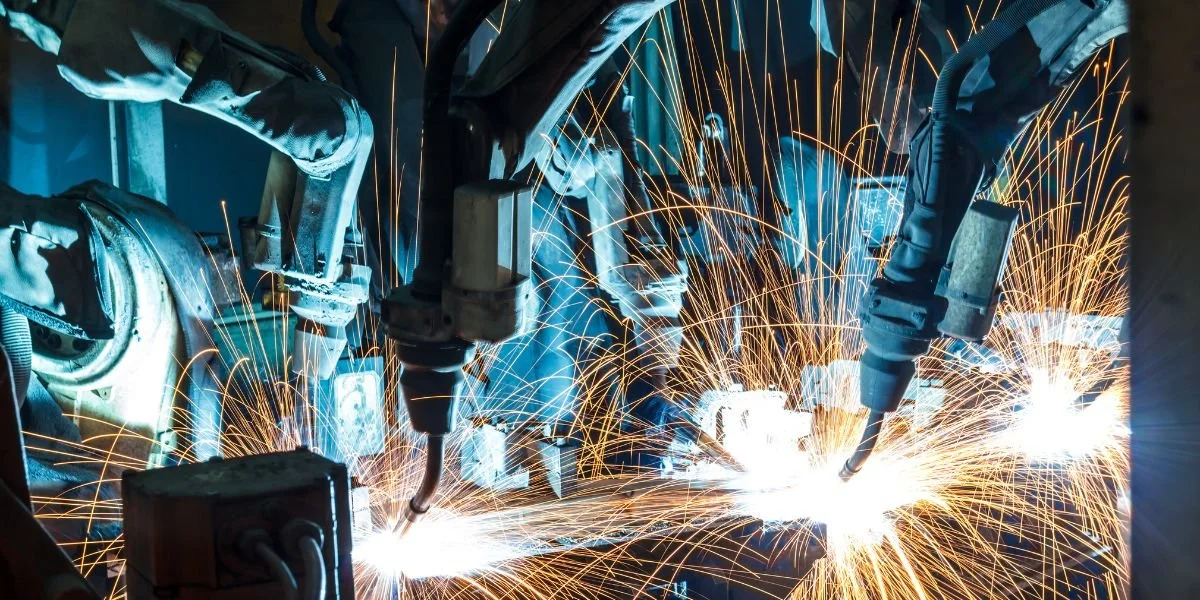
Is Your Project a Good Fit for Robotic Welding?
| Project Factor | Generally Favorable for Robotic Welding | May Require Additional Evaluation |
|---|---|---|
| Production volume | Recurring orders or repeat production runs | One-off projects or limited production quantities |
| Component geometry | Consistent dimensions and predictable joint locations | Complex geometries or variations between components |
| Weld accessibility | Joints accessible to the robotic welding equipment | Obstructed joints or limited torch clearance |
| Part fit-up | Consistent joint alignment and preparation | Variable gaps, alignment, or joint preparation |
| Fixturing | Components can be positioned and secured consistently | Complex positioning or specialized fixture requirements |
| Production changes | Stable drawings and recurring specifications | Frequent revisions requiring programming or setup adjustments |
These factors are general guidelines rather than strict requirements. Projects with complex geometry or smaller production quantities are not automatically excluded from robotic welding.
Washington Metal Fabricators evaluates welding requirements based on customer-provided drawings, component specifications, and available equipment to determine an appropriate manufacturing approach.
Robotic and Manual Welding Services
Although automation offers advantages for repeat production, manual welding remains important for components requiring flexibility in positioning, technique, or joint access.
Washington Metal Fabricators maintains 15 certified welding stations supporting MIG, TIG, and resistance welding, alongside its robotic welding equipment.
Having access to both approaches allows WMF to support different manufacturing requirements without relying exclusively on automation.
For example, a project may contain repeatable welded components suitable for robotic processing alongside more complex assemblies requiring manual welding.
Companies evaluating robotic welding services should consider the specific requirements of their components rather than assuming automated welding is always preferable.
Learn more about the differences in our guide to robotic welding vs. manual welding.
Integrated Metal Fabrication Capabilities
Welding is often one stage in the manufacturing of a complete metal product.
Washington Metal Fabricators offers sheet and tube laser cutting, CNC punching, metal forming, machining, grinding, polishing, and powder coating in addition to its welding operations.
These capabilities allow robotic welding services to complement other fabrication processes within a broader manufacturing project.
For businesses sourcing custom metal products, this can simplify coordination between fabrication stages while supporting production according to customer-provided specifications.
WMF operates as a build-to-print fabricator, manufacturing from customer-supplied drawings rather than providing product engineering or design services.
Explore our metal fabrication capabilities and equipment for more information about available manufacturing processes.
Frequently Asked Questions About Robotic Welding Services
Can robotic welding be used to manufacture complete metal products?
Yes. Robotic welding can be incorporated into the manufacturing of complete metal products and assemblies. Washington Metal Fabricators provides build-to-print fabrication services that combine welding with cutting, forming, machining, and finishing to manufacture products according to customer-provided specifications.
What types of materials can be robotically welded?
Robotic welding can be used with various metals, including carbon steel, stainless steel, and aluminum, depending on the equipment and welding process. Specific material compatibility should be confirmed for each project.
How is weld quality maintained during robotic welding?
Weld quality depends on consistent part preparation, proper fixturing, established welding parameters, and appropriate quality control. Washington Metal Fabricators operates a Genesis Versa2 robotic welding system and maintains ISO 9001:2015 certification as part of its broader quality management practices.
What information is needed to request a robotic welding quote?
Companies interested in Washington Metal Fabricators' robotic welding services should provide detailed drawings, material specifications, weld requirements, anticipated production quantities, and project timelines. This information helps WMF evaluate the project and determine an appropriate manufacturing approach.
Request a Quote for Robotic Welding Services

Robotic welding can support consistent, repeatable production of custom metal components, assemblies, and finished products when the process is appropriate for the project.
With automated and manual welding capabilities, Washington Metal Fabricators serves businesses seeking a build-to-print manufacturing partner for industrial metal fabrication.
Contact Washington Metal Fabricators today to discuss your drawings, specifications, and production requirements.
Follow Washington Metal Fabricators on Facebook and LinkedIn for updates on our fabrication capabilities and recent projects.
