
When manufacturers need hundreds or thousands of the same metal component, the production process can have a major impact on efficiency and consistency. A method that works well for a prototype or short run may not be the best option once a component enters repeat production.
For the right parts and production volumes, custom metal stamping provides a way to repeatedly form metal components using presses and specialized tooling. The process is widely used in industrial and OEM manufacturing to produce components that must meet the same specifications across ongoing production runs.
Washington Metal Fabricators supports stamping projects with three coil-fed stamping lines and seven additional presses ranging from 30 to 150 tons. These capabilities are complemented by laser cutting, forming, machining, welding, finishing, and other fabrication processes for projects requiring multiple manufacturing operations.
What Is Custom Metal Stamping?
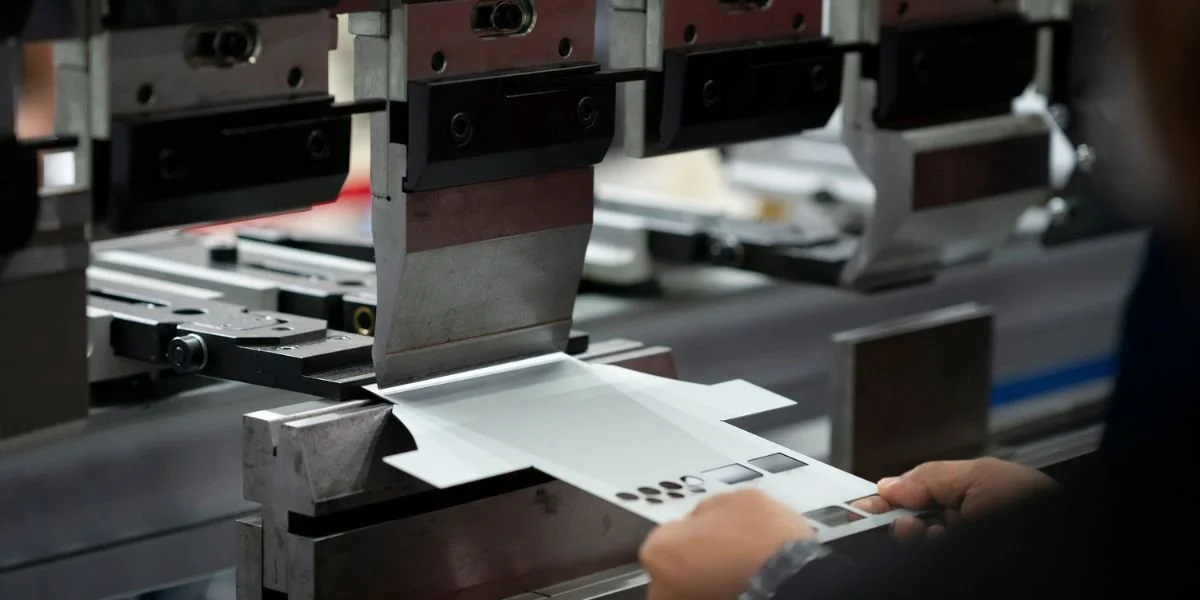
Custom metal stamping uses a press and tooling to shape metal according to the requirements of a particular component. Depending on the tooling and part specifications, stamping can be used to bend, form, punch, or create other features in the material.
Rather than producing a standardized off-the-shelf product, the process can manufacture components according to customer-provided drawings and specifications.
Common types of stamped components can include:
Brackets and mounting components
Supports and reinforcements
Plates and panels
Clips, tabs, and retainers
Covers and enclosure components
Housings
Equipment and machinery components
Many stamped parts are relatively small or medium-sized pieces that eventually become part of larger equipment or products. However, stamping is not limited specifically to small components. Material, dimensions, geometry, tooling requirements, and available press capacity all influence whether a particular part is a good candidate.
How Does the Metal Stamping Process Work?
The exact process depends on the part being manufactured, but stamping generally uses tooling or dies within a press to apply force to metal and create the required shape or features.
Material is first prepared according to the project's specifications. The appropriate tooling and press are then configured for the component. Once production begins, the operation can be performed repeatedly to manufacture the required quantity.
This repeatability is a major reason custom metal stamping is useful for ongoing production. Instead of individually performing several fabrication steps on every component, appropriate features may be produced through repeat press operations.
The stamped part may then move into secondary processes. Depending on the project, these can include machining, welding, grinding, polishing, powder coating, or other finishing operations.
Why Is Metal Stamping Used for Higher-Volume Production?
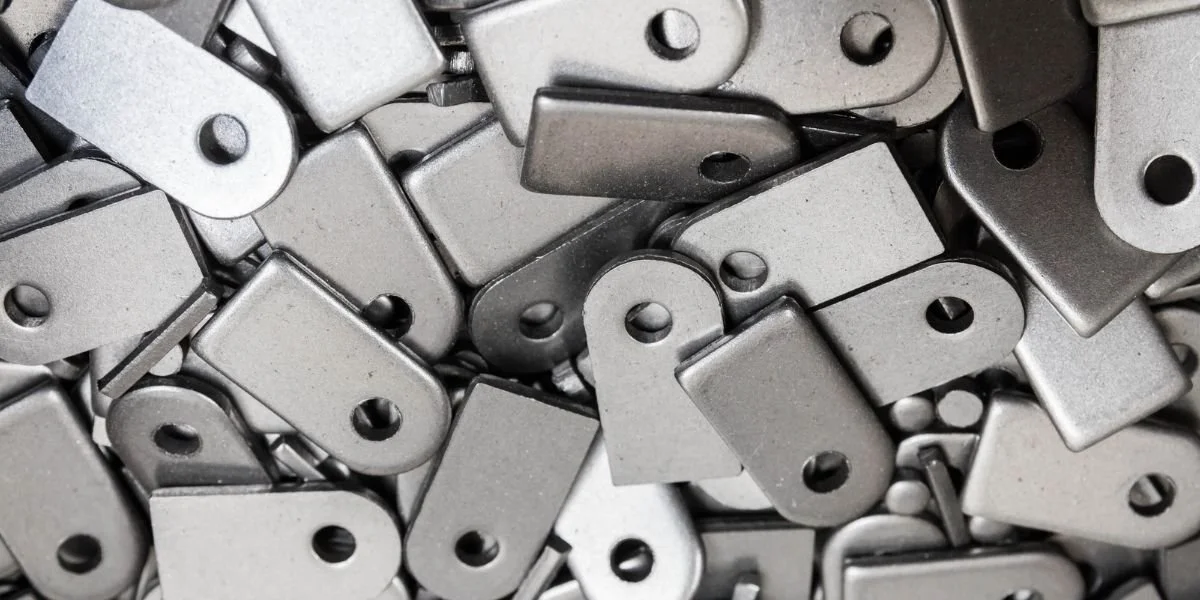
Stamping can become particularly valuable when a manufacturer needs significant quantities of the same component.
Imagine an OEM produces industrial equipment that requires four identical mounting brackets in every finished unit. Producing a handful of brackets for an initial prototype is very different from supplying thousands of brackets for ongoing manufacturing.
Once production quantities increase, stamping may offer several advantages.
Repeatability: Established tooling allows the same operation to be performed repeatedly throughout a production run.
Efficiency: For appropriate parts, stamping can reduce the number of individual fabrication operations required to manufacture each component.
Consistency: A repeatable production process helps manufacturers produce components according to the same customer-provided specifications across larger quantities.
Support for repeat orders: Manufacturers may need the same components month after month or year after year. Stamping can support ongoing production when the part and quantities are well suited to the process.
That doesn't mean stamping is automatically the right choice for every high-volume component. Geometry, material, tolerances, tooling requirements, and production quantities all need to be considered. Other processes such as laser cutting, CNC punching, forming, or machining may be more appropriate depending on the project.
For manufacturers evaluating how to efficiently scale a component, stamping may be one part of a broader production metal fabrication strategy.
What Is Coil-Fed Metal Stamping?
Coil-fed stamping uses metal supplied continuously from a coil into the stamping equipment. Rather than individually loading separate pieces of material for each cycle, the material can be fed through the equipment as the stamping operation is repeated.
For appropriate components, this process can support efficient repeat production.
Washington Metal Fabricators operates three coil-fed stamping lines as part of its custom metal stamping capabilities. WMF also operates seven additional presses ranging from 30 to 150 tons.
Having multiple presses gives manufacturers options based on the material, component specifications, tooling, and production requirements of the project.
Custom Metal Stamping Capabilities at Washington Metal Fabricators
Stamping is one part of WMF's broader range of metal fabrication capabilities and equipment.
In addition to three coil-fed stamping lines and seven additional presses, WMF provides:
Sheet and tube laser cutting
CNC punching
Metal forming and rolling
CNC machining
Manual and robotic welding
Grinding and polishing
Powder coating
The availability of multiple processes matters because a stamped component may not be finished when it leaves the press. It could require welding, machining, finishing, or another operation before it is ready for its intended application.
For complex production projects involving multiple components or processes, stamping can therefore work as one part of a broader large scale metal fabrication program.
When Does Custom Metal Stamping Make Sense?
One of the most important considerations is production volume. Creating the tooling and setting up a stamping process needs to make sense for the quantity being manufactured.
Custom metal stamping may be worth considering when:
The same component is required repeatedly
Higher production quantities are anticipated
The part geometry is suitable for stamping
Repeat orders or ongoing production are expected
Consistency across components is important
Tooling and setup are justified by the anticipated volume
For prototypes or very short production runs, another fabrication method may be more practical. This is why manufacturers should provide anticipated quantities when requesting a quote rather than evaluating the component in isolation.
Industries That Use Custom Metal Stamping
Stamped components can be found throughout industrial manufacturing. In many applications, the stamped part is one component within a much larger product or system.
OEM and Industrial Manufacturing
OEMs can require brackets, supports, mounting components, panels, housings, and other repeat parts for machinery and equipment. When the same component is required across an ongoing production program, stamping may provide an efficient manufacturing option.
WMF's OEM metal fabrication capabilities support manufacturers requiring custom components for repeat production.
Electrical and Power Equipment
Electrical equipment and infrastructure can incorporate a wide variety of metal brackets, supports, panels, mounting components, and enclosure parts. Depending on their specifications and required quantities, some components may be suitable for stamping.
HVAC and Commercial Equipment
HVAC systems and other commercial equipment frequently contain fabricated sheet metal components. Brackets, supports, panels, and mounting pieces are examples of parts that may be produced through stamping when the project requirements are appropriate.
Industrial Machinery and Material Handling
Manufacturing equipment, conveyors, and material-handling systems can require repeat metal components such as brackets, supports, plates, guards, and mounting hardware.
Across these industries, the common factor is not necessarily the physical size of the part. It is the need to manufacture the same custom component efficiently and repeatedly.
What to Look for in a Custom Metal Stamping Partner
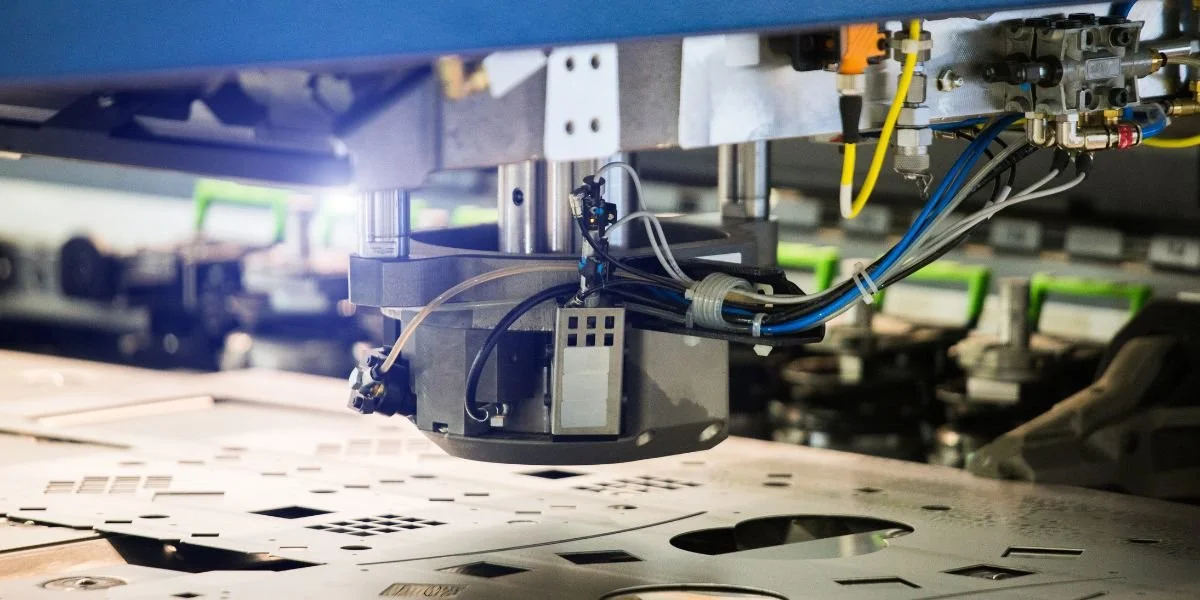
Manufacturers should evaluate more than whether a potential supplier simply owns a stamping press. The available equipment and surrounding fabrication capabilities should match the requirements of the project.
Important considerations include:
Available press capacities
Coil-fed and other stamping equipment
Material and component requirements
Anticipated production quantities
Ability to support repeat orders
Additional fabrication and finishing capabilities
Quality-management processes
Ability to manufacture from customer-provided drawings and specifications
Washington Metal Fabricators is ISO 9001:2015 certified and has equipment capable of supporting both short prototype runs and high-volume production.
Frequently Asked Questions About Custom Metal Stamping
What is custom metal stamping?
Custom metal stamping uses presses and specialized tooling to manufacture metal components according to specific requirements. Depending on the part, the process can create bends, forms, holes, and other features.
Is metal stamping suitable for high-volume production?
Yes. Stamping can be particularly useful for higher-volume and repeat production because established tooling allows the same operations to be performed efficiently across many components. Whether it makes sense depends on the part, material, tooling requirements, and production quantity.
What is coil-fed metal stamping?
Coil-fed stamping continuously supplies metal from a coil into the stamping equipment. For suitable components, this can provide an efficient way to support repeat production.
What types of components can be produced through stamping?
Stamped components can include brackets, mounting components, supports, plates, panels, clips, covers, housings, and other formed parts. The appropriate manufacturing process depends on the component's specifications.
What is the difference between metal stamping and metal forming?
Metal forming is a broad category of processes used to change the shape of metal. Stamping is one type of forming process that uses presses and tooling to perform specific operations. Other forming methods include press brake forming and metal rolling.
What information is needed for a custom metal stamping quote?
For a custom metal stamping quote, manufacturers should provide available drawings and specifications, material requirements, dimensions and tolerances, initial quantities, anticipated ongoing production volume, finishing requirements, and any additional fabrication needs.
Choosing the Right Custom Metal Stamping Partner

Custom metal stamping can provide an efficient solution for repeat production when the component, material, and volume are a good fit for the process. With multiple stamping lines and presses alongside broader fabrication capabilities, Washington Metal Fabricators can support custom components as part of ongoing OEM and industrial production.
Contact Washington Metal Fabricators today to discuss your drawings, specifications, quantities, and production requirements.
Follow Washington Metal Fabricators on Facebook and LinkedIn for more information about our fabrication capabilities and recent projects.
